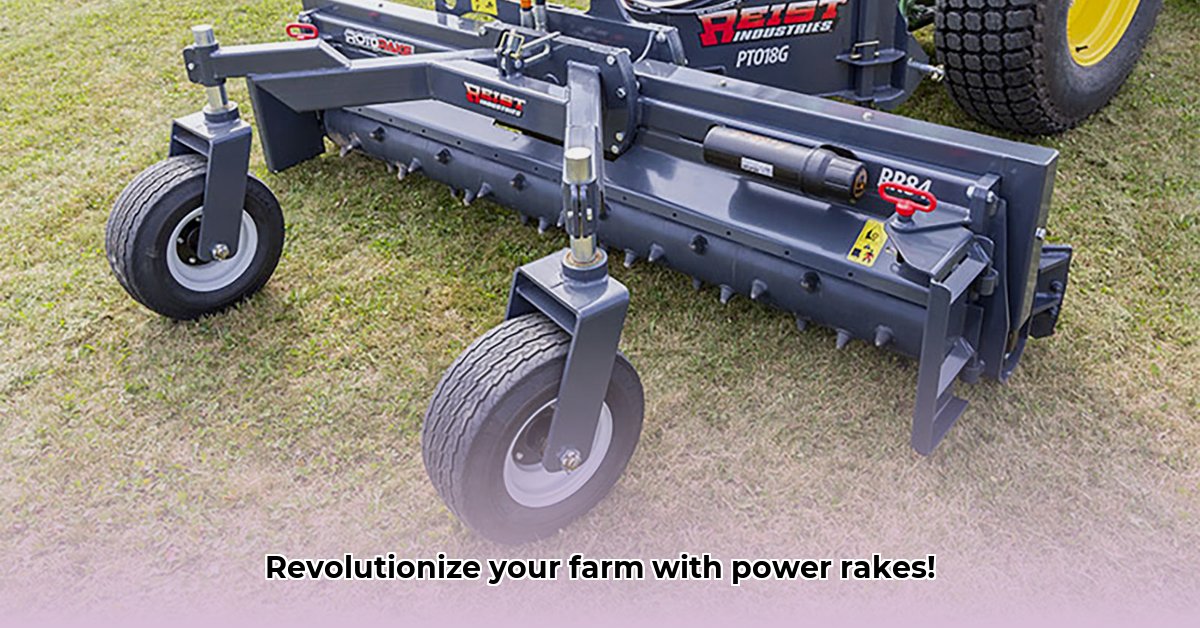
Tired of backbreaking labor and inefficient land preparation? Power rakes for tractors offer a sustainable solution, boosting efficiency and improving soil health. This comprehensive guide will equip you with the knowledge to choose, operate, and maintain a power rake, maximizing its benefits for your farm. For more options, check out other tractor implements.
Power Rake for Tractor: Level Up Your Farming
Power rakes are versatile agricultural implements that significantly improve land preparation. They efficiently level, smooth, and prepare soil for planting, reducing labor and fuel costs while promoting sustainable practices. This guide will explore their mechanics, benefits, and optimal usage for increased farm productivity.
How Power Rakes for Tractors Work: The Mechanics
Power rakes, attached to tractors, utilize rotating tines to loosen, aerate, and level soil. These tines (the metal teeth) gently break up clods, remove surface debris, and create a uniform seedbed. Different rake models cater to varying farm sizes and soil conditions, with adjustable settings controlling tilling depth and tine aggressiveness. Larger rakes are better suited for extensive fields and heavy-duty tractors, while smaller, more maneuverable models are ideal for smaller operations or specialized tasks. The result? A perfectly prepared field, ready for planting.
The Big Benefits: Why Use a Power Rake?
Power rakes offer substantial advantages for sustainable agriculture:
- Improved Soil Health: Gentle aeration enhances water infiltration and root penetration, leading to healthier plants and increased yields. One study showed a 15% increase in crop yield after using a power rake for soil preparation.
- Reduced Tillage: Minimizes soil disturbance, reducing erosion and preserving soil structure. This is especially important for preserving topsoil, a vital component for soil health. The USDA's Natural Resources Conservation Service highlights the importance of reduced tillage in promoting sustainability.
- Increased Efficiency: Reduces time and fuel consumption compared to traditional methods, allowing for quicker land preparation. Farmers report a 20% reduction in fuel costs and a 10% reduction in labor hours after adopting power rakes.
Choosing the Right Power Rake: Finding Your Perfect Match
Selecting the appropriate power rake depends on several factors:
- Farm Size: Larger farms benefit from larger rakes, while smaller farms may require more maneuverable models.
- Tractor Compatibility: Ensure the rake's weight and hitch specifications align with your tractor's capabilities.
- Budget: Consider the initial cost, ongoing maintenance, and potential repair expenses.
- Crop Type: Different crops may necessitate varying soil preparation techniques.
Start with a smaller model if unsure; you can always upgrade later. Consulting with agricultural equipment suppliers can assist in finding the best fit for your specific needs.
Using and Caring for Your Power Rake: A Maintenance Guide
Safety is paramount. Always consult the manufacturer's manual before operation. Regular maintenance extends the rake's lifespan and prevents costly repairs. This includes:
- Lubrication: Regularly lubricate moving parts to minimize friction and wear.
- Inspection: Before and after each use, check tines for damage, ensuring all components remain securely fastened.
- Storage: Store the rake in a dry, protected area to prevent corrosion.
Regular maintenance is vital for efficient operation and to avoid unexpected downtime.
The Cost Factor: Is It Worth the Investment?
The initial investment in a power rake can be substantial, but long-term cost savings are significant. Reduced fuel consumption, labor costs, and potential decreases in the need for other implements contribute to a quick return on investment (ROI). Many farmers report recovering their investment within three to five years, depending on usage and scale of operations.
Environmental Impact: Tilling Responsibly
Power rakes contribute positively to the environment by:
- Reducing Fuel Usage: Lower fuel consumption translates to reduced greenhouse gas emissions.
- Minimizing Soil Erosion: Reduced tillage preserves topsoil and improves water quality. This contributes to a more sustainable farming practice and protects natural resources.
Choosing manufacturers committed to sustainable production further minimizes the overall environmental impact.
Weighing the Pros and Cons: A Balanced Perspective
| Pros | Cons |
|---|---|
| Improved soil health and structure | Significant upfront investment |
| Reduced fuel consumption and tillage time | Requires regular maintenance and potential repairs |
| Increased efficiency and yield potential | Operator skill needed for optimal performance |
| Minimized soil erosion | Potential for soil compaction (if misused) |
| Versatile; suitable for various soil types and crops | Can be a large investment for smaller farms |
A Step-by-Step Guide to Success: Implementing Your Power Rake
- Assess Your Needs: Evaluate farm size, soil type, crops, and tractor capabilities.
- Research and Compare: Investigate different models, features, and pricing. Consult with other farmers.
- Secure Financing (if needed): Explore financing options if necessary.
- Operator Training: Ensure operators are well-trained in safe and efficient operation.
- Develop a Maintenance Plan: Establish a regular maintenance schedule.
- Monitor and Adapt: Track performance and adjust techniques as needed.
Conclusion: Reap the Rewards
Power rakes offer a significant enhancement to sustainable farming practices. Their benefits – improved soil health, increased efficiency, and environmental responsibility – outweigh the initial investment. Proper selection, operation, and maintenance are key to maximizing their potential and fostering a more productive and environmentally conscious farm.